
When your furry friend isn’t feeling well, your heart sinks. Taking your pet to the vet in Greece, the κτηνίατρος (ktiníatros) “vet” at the local κτηνιατρείο (ktiniatrío) “vet clinic”, can feel stressful when you’re worried about your pet and the language at the same time. Many Greek vets speak some English, but the phone call, the front desk and the instructions will often be in Greek. So this guide helps you learn Greek for exactly these moments.
The good news, however, is that you don’t need to be fluent. In fact, with a few key phrases and a clear picture of how a visit works, you can handle everything from booking the appointment to understanding the vet’s instructions. However, for any urgent concern or emergency, contact a vet immediately.
Vet in Greece: Quick Reference
KTINÍATROS
“VET”
The vet visit cheat sheet
Screenshot this box before you go. These phrases cover the booking, the symptoms and also the moment you don’t understand something.
| Greek | Pronunciation | English |
|---|---|---|
| Θα ήθελα να κλείσω ένα ραντεβού. | tha íthela na klíso éna randevú | “I’d like to make an appointment.” |
| Δεν τρώει. | dhen tróï | “He / She isn’t eating.” |
| Κάνει εμετό. | káni emetó | “He / She is vomiting.” |
| Έχει διάρροια. | échi dhiárria | “He / She has diarrhea.” |
| Κουτσαίνει. | kutséni | “He / She is limping.” |
| από… | apó | “since…” (από χθες, apó chthes, “since yesterday”) |
Lifesaver phrase: Μπορείτε να το επαναλάβετε, παρακαλώ; (boríte na to epanalávete, parakaló?) “Could you say that again, please?”
Before you call, read the phrases out loud once. Then keep the screenshot open during the visit, so you can point to a line if you get stuck.

|
Get 30+ Free Greek Conversation Cheat Sheets Speak more Greek with 30+ conversation cheat sheets covering daily life, practical phrases, and common topics. Get the Free PDF Cheat Sheets |
Table of Contents
- How to Book an Appointment Without Panicking
- Describing Symptoms So the Vet Understands
- The Questions at the Front Desk
- Understanding the Vet’s Instructions
- Costs, Payment and Pet Insurance
- Greece’s Pet Rules in One Minute
- Emergencies and On-Duty Clinics
- Dialogue: From the Phone Call to the Exam Room
- Try It Yourself
- Vet in Greece FAQ
- Final Thoughts
1. How to Book an Appointment Without Panicking

Here’s what usually happens. First of all, you call the clinic to book a time. Then you arrive a few minutes early, because the front desk will register your pet. After that, the vet examines your pet and explains the treatment. Finally, you pay at the desk before you leave.
When you call, the clinic will answer with something like Κτηνιατρείο, παρακαλώ. (ktiniatrío, parakaló.) “Vet clinic, hello.” Then follow this simple script:
- To begin with, greet and state your purpose: Καλημέρα. Θα ήθελα να κλείσω ένα ραντεβού. (kaliméra. tha íthela na klíso éna randevú.) “Good morning. I’d like to make an appointment.”
- Then say what animal it is: Για τον σκύλο μου. (ya ton skílo mu.) “For my dog.” or Για τη γάτα μου. (ya ti gháta mu.) “For my cat.”
- After that, give your pet’s details: Τον λένε Μαξ. Είναι πέντε χρονών. (ton léne Max. íne pénde chronón.) “His name is Max. He’s five years old.”
- Finally, briefly describe the problem: Δεν τρώει. (dhen tróï.) “He isn’t eating.”
If you can’t manage a full conversation, however, this backup phrase asks for a same-day spot: Μπορείτε να μας δείτε σήμερα; (boríte na mas dhíte símera?) “Could you see us today?” And when you arrive, tell the front desk:
After that, the receptionist will usually offer a day and a time, so listen carefully for the numbers.
Έχω ένα ραντεβού για σήμερα. – I have an appointment for today.
What kind of pet? Saying the animal’s name
At the clinic, the receptionist will also want to know what animal you’re bringing. These three cover most pets in Greece, so start with them:

σκύλος skílos
ο σκύλος
“dog”

γάτα gháta
η γάτα
“cat”
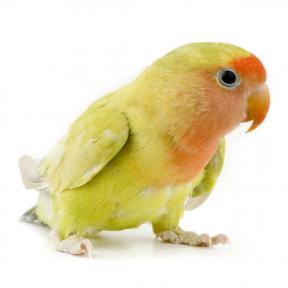
πουλί pulí
το πουλί
“bird”
Tip: Greek nouns change form with the grammar, so the ending matters. That’s why you say τον σκύλο μου (ton skílo mu) “my dog” after για, not ο σκύλος.
🔒
Unlock 18 more animal names
Fish, mice, horses and more: the free Animal Names list on GreekPod101 has 21 animal words with native audio and example sentences, so they’re ready to save to your flashcards.
Get the Full Word List2. Describing Symptoms So the Vet Understands
Above all, clear and simple beats perfect grammar. So have these phrases ready:
- Not eating: Δεν τρώει. (dhen tróï) or Δεν έχει όρεξη. (dhen échi órexi) “has no appetite”
- Vomiting: Κάνει εμετό. (káni emetó)
- Limping: Κουτσαίνει. (kutséni)
- No energy: Είναι πολύ κουρασμένος. (íne polí kurasménos) “He’s very tired.” (κουρασμένη, kurasméni, for a female pet)
- Diarrhea: Έχει διάρροια. (échi dhiárria)
For example, not eating and vomiting are two of the first things a vet will ask about.
Then say how long it’s been happening, because it helps the vet a lot:
- από σήμερα το πρωί (apó símera to proí) “since this morning”
- από χθες (apó chthes) “since yesterday”
- εδώ και τρεις μέρες (edhó ke tris méres) “for three days”
Then put it together: Κάνει εμετό από χθες. (káni emetó apó chthes.) “He’s been vomiting since yesterday.” Note that Greek uses the present tense here, whereas English says “has been.”
Can’t find the word? Then point to the spot on your pet and say Εδώ. (edhó.) “Here.” The vet may then ask:
Also, if your pet seems to be in pain, say so right away, because the vet will check that first.
Πονάει όταν πιέζω εδώ; – Does it hurt when I press here?
3. The Questions at the Front Desk
On your first visit, the clinic will also open a file for your pet. Generally, the receptionist asks the questions out loud. So be ready for these:
| They ask | Pronunciation | English |
|---|---|---|
| Στο όνομα ποιου; | sto ónoma pyu? | What name is it under? |
| Πώς το λένε; | pos to léne? | What’s the pet’s name? |
| Τι ράτσα είναι; | ti rátsa íne? | What breed is it? |
| Αρσενικό ή θηλυκό; | arsenikó i thilikó? | Male or female? |
| Πόσο χρονών είναι; | póso chronón íne? | How old is it? |
| Έχει τσιπάκι; | échi tsipáki? | Is it microchipped? |
| Έχετε το βιβλιάριο υγείας; | échete to vivliário iyías? | Do you have the pet health booklet? |
Then the receptionist will ask you to wait, so take a seat until the vet calls your pet’s name.
Most of these questions are short, so you’ll often catch just the key word, such as ράτσα (rátsa, breed).
Stuck on a question? Then ask Συγγνώμη, τι σημαίνει αυτό; (sighnómi, ti siméni aftó?) “Sorry, what does that mean?”
Pro tip: before every visit, pack your pet’s βιβλιάριο υγείας (vivliário iyías) “pet health booklet” or EU pet passport. It lists vaccines and treatments, so the vet doesn’t have to ask. Also, mention any medicine your pet already takes.
4. Understanding the Vet’s Instructions
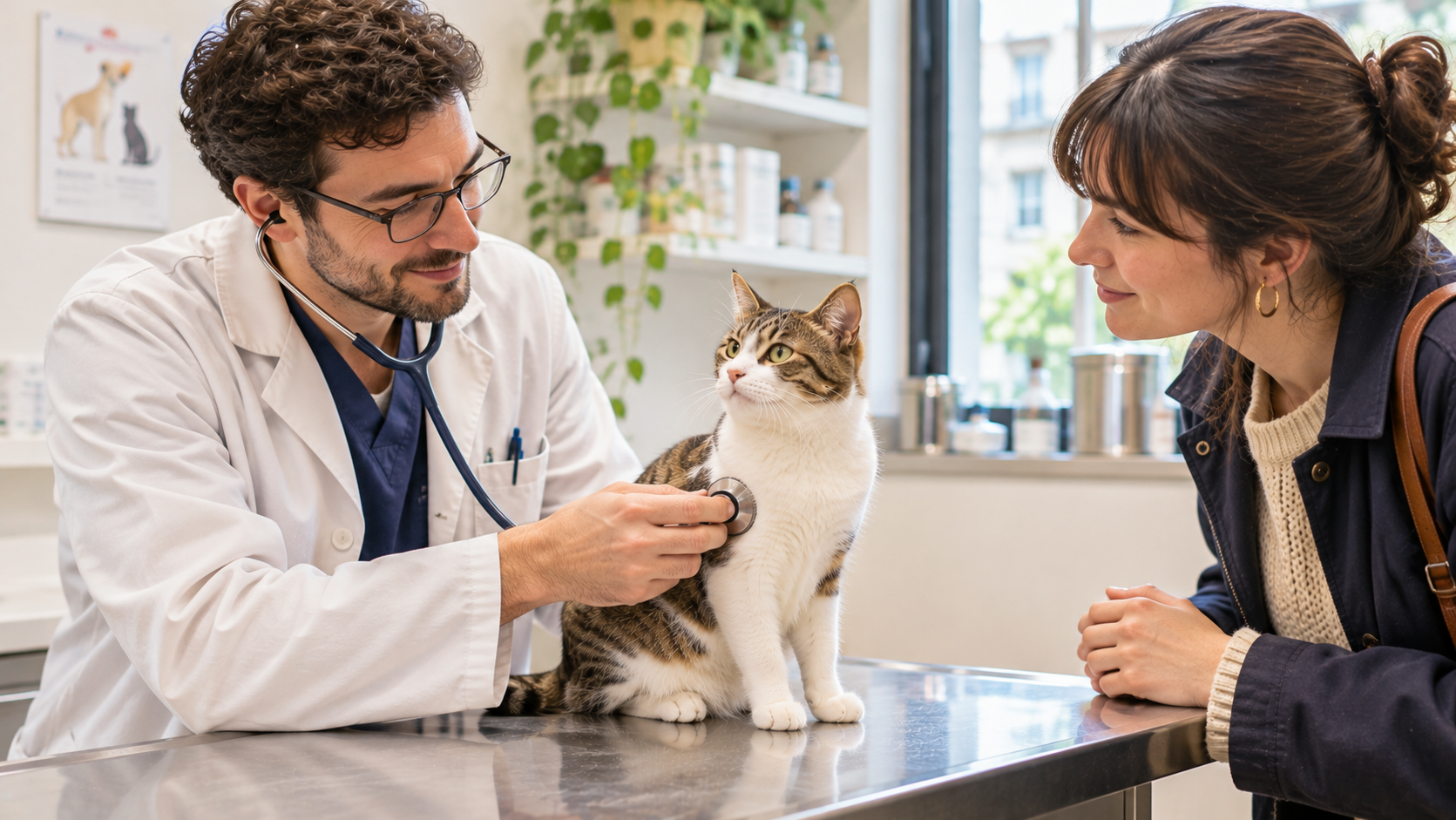
Usually, the vet explains the treatment first and then writes it down for you.
After the exam, listen for these common phrases, because the vet will use them a lot:
- Θα σας γράψω ένα φάρμακο. (tha sas ghrápso éna fármako.) “I’ll prescribe some medicine.” This is often followed by the dosage, such as δύο φορές την ημέρα (dhío forés tin iméra) “twice a day”
- Παρακολουθήστε τον. (parakoluthíste ton.) “Keep an eye on him.” In other words, watch your pet at home and see if things improve.
- Θα του κάνω μια ένεση. (tha tu káno mia énesi.) “I’ll give him an injection.”
- Χρειάζεται εμβόλιο. (chriázete emvólio.) “He needs a vaccine.”
φάρμακο – medicine
ένεση – injection
Λήψη μετά το γεύμα. – Take after a meal.
Can’t read the label on the box? Then start with the Greek alphabet, because the letters are easier than they look. Also, don’t just nod when you don’t understand. Instead, ask:
- Μπορείτε να το επαναλάβετε, παρακαλώ; (boríte na to epanalávete, parakaló?) “Could you say that again, please?”
- Πότε πρέπει να του δίνω το φάρμακο; (póte prépi na tu dhíno to fármako?) “When should I give him the medicine?”
- Πρέπει να ξανάρθουμε; (prépi na xanárthume?) “Do we need to come back?”
Ελάτε ξανά σε μία εβδομάδα. – Come back in a week.
Also, for more ready-to-use phrases like these, download the free Greek Phrasebook.
Also, write the dosage down before you leave, so you don’t forget it at home.
Feel confident at every vet visit
GreekPod101 also teaches you the real Greek you need for daily life in Greece, with native audio and video lessons. So start for free.
Start Learning for Free5. Costs, Payment and Pet Insurance
Vet care in Greece isn’t covered by public health insurance, so you pay the full bill at the end of each visit. Prices vary between clinics, so it’s fine to ask first:
- Πόσο περίπου θα κοστίσει; (póso perípu tha kostísi?) “About how much will it cost?”
- Μπορώ να πληρώσω με κάρτα; (boró na pliróso me kárta?) “Can I pay by card?”
- Μπορώ να έχω απόδειξη; (boró na écho apódhixi?) “Can I have a receipt?”
- Ο σκύλος μου είναι ασφαλισμένος. (o skílos mu íne asfalisménos.) “My dog is insured.”
In addition, smaller clinics may prefer cash, so it’s worth asking before you go.
Pet insurance is still less common in Greece than in some other countries, though. If you have it, however, keep the receipt and the vet’s report to claim your money back from your insurer.
Finally, if you plan to claim from your insurer, ask for a detailed receipt as well.
6. Greece’s Pet Rules in One Minute
What every pet owner in Greece should know
Microchip and registration: under Law 4830/2021, every pet dog and cat must have a microchip, τσιπάκι (tsipáki), and be registered in the National Register of Companion Animals. Your vet can also do both. Otherwise, not having a microchip can mean a €300 fine.
Neutering: similarly, the same law makes neutering mandatory for pet dogs and cats, with some exemptions. So ask your vet what applies to your pet.
Good to know: the same law gives every household the right to keep up to two companion animals (for example, a dog and a cat), even if the apartment building’s rules say otherwise. Also, for travel abroad, your pet needs an EU pet passport and a rabies vaccination.
In short, a microchip, registration and the right vaccines keep you on the right side of the law.
Need help with any of it? Then ask your vet: Μπορείτε να με βοηθήσετε με την καταχώριση; (boríte na me voithísete me tin katachórisi?) “Could you help me with the registration?”
7. Emergencies and On-Duty Clinics
However, many clinics close in the evening and on Sundays. So, for a night or weekend emergency, look for an εφημερεύον κτηνιατρείο (efimerévon ktiniatrío) “on-duty vet clinic” or a 24ωρο κτηνιατρείο (ikositetráoro ktiniatrío) “24-hour vet clinic”, which you’ll find in Athens, Thessaloniki and other big cities. Ask your regular vet which one they recommend, and save the number before you need it.
When you arrive, use these two phrases:
- Είναι επείγον. (íne epíghon.) “It’s an emergency.”
- Μπορείτε να μας δείτε τώρα; (boríte na mas dhíte tóra?) “Can you see us now?”
Also, keep your pet’s health booklet near the door, so you can grab it quickly in an emergency.
8. Dialogue: From the Phone Call to the Exam Room
So here’s how a whole visit can sound, from the phone call to the exam room. Notice, too, how few words you actually need.
On the Phone: Booking the Visit
Notice that the receptionist asks for a name, because the visit is booked under the owner’s name rather than the pet’s.
In the Exam Room: Talking to the Vet
Then, when you ask, the vet repeats the dosage and also adds one more instruction. Finally, the visit ends with a simple thank-you.
See how “You” asked the vet to repeat the instructions? Indeed, that one phrase, Μπορείτε να το επαναλάβετε; (boríte na to epanalávete?), is the most useful thing you can say at any appointment.
Want to hear a real vet conversation with native audio? Then listen to the GreekPod101 lesson A Trip to the Greek Vet.
9. Try It Yourself
Now build your own appointment line, so you’re ready: greeting, request, your pet, and a symptom with από. For example:
Καλημέρα. Θα ήθελα να κλείσω ένα ραντεβού για τη γάτα μου. Κάνει εμετό από σήμερα το πρωί. (kaliméra. tha íthela na klíso éna randevú ya ti gháta mu. káni emetó apó símera to proí.) “Good morning. I’d like to make an appointment for my cat. She’s been vomiting since this morning.”
To begin with, say the greeting. Then add your request. After that, name your pet. Finally, describe the symptom with από.
Now write your own version with your pet’s details, and say it out loud a few times so it’s ready when you need it.
Then record yourself, so you can hear how you sound and fix any tricky words. After that, try it again with a different symptom.
Read your first story about pets in Greek
In the free beginner lesson Pets (Extensive Reading for Absolute Beginners #1), you’ll read and hear a short, simple story about pets, which is also perfect practice for your next vet visit.
Read the Lesson10. Vet in Greece FAQ
Do vets in Greece speak English?
Many do, especially in Athens, Thessaloniki and tourist areas, but the phone call and the front desk are often in Greek. Still, a few simple phrases and your pet’s health booklet go a long way.
Do I need an appointment to see a vet in Greece?
Most clinics work by appointment, so it’s best to call ahead. However, in an emergency, call on your way or go straight to an on-duty clinic.
Is vet care covered by insurance in Greece?
No, not by public health insurance, so you pay the full bill, although private pet insurance can reimburse part of it.
Is microchipping mandatory in Greece?
Yes, because under Law 4830/2021, pet dogs and cats must be microchipped and registered in the National Register of Companion Animals. Your vet can also do both.
How do you say “vet” in Greek?
Ο κτηνίατρος (o ktiníatros), or η κτηνίατρος for a woman. The clinic, on the other hand, is το κτηνιατρείο (to ktiniatrío).
Final Thoughts
Taking your pet to the vet in another language is a challenge, but with these phrases you can focus on what matters most: getting your companion the care they deserve. Also, every visit gets easier as you build a relationship with your local vet. In short, a little Greek goes a long way, and with each visit, you’ll understand a little more.
Before your next visit, can you…?
✓Book an appointment and say your pet’s species, name and age?
✓Describe a symptom and how long it’s been happening with από?
✓Answer the front-desk questions and show the βιβλιάριο υγείας?
✓Understand Θα σας γράψω ένα φάρμακο and Παρακολουθήστε τον, and ask the vet to repeat?
✓Find an on-duty or 24-hour vet clinic for an emergency?
Learn Greek for real life in Greece
From the vet to the bakery, GreekPod101 has hundreds of audio and video lessons, so you’re ready for everyday situations in Greece.
Sign Up for FreeYour turn: introduce your pet in Greek in the comments! For example, try Τον / Τη λένε… Είναι… χρονών. (ton / ti léne… íne… chronón.) “His / Her name is… He’s / She’s… years old.”