

Planning a trip to Greece is exciting—sun-drenched islands, ancient ruins, and incredible food await. But how do you talk about where you want to go? Knowing the names of popular places in Greece is the first step. The next is learning the simple phrases to ask for directions and state your destination. This guide will give you the essential words and patterns you’ll need to navigate with confidence.
Let’s start by listening in on a real conversation.
Table of Contents
Listen In: Sara and Anna Plan Their Trip to Greece

Follow along as Sara asks for information and Anna helps her plan their dream trip. Notice how they use a few key phrases to ask about and identify locations.
Sara: Πού είναι η Σαντορίνη; Poú eínai i Santoríni? “Where is Santorini?”
Anna: Είναι στις Κυκλάδες. Eínai stis Kykládes. “It’s in the Cyclades.”
Sara: Ah! Θέλω να πάω στη Σαντορίνη. Είναι κοντά ή μακριά; Ah! Thélo na páo sti Santoríni. Eínai kontá í makriá? “Ah! I want to go to Santorini. Is it near or far?”
Anna: Είναι λίγο μακριά από την Αθήνα, αλλά αξίζει. Eínai lígo makriá apó tin Athína, allá axízei. “It’s a little far from Athens, but it’s worth it.”
Sara: Ωραία. Ευχαριστώ πολύ. Oraía. Efcharistó polý. “Great. Thank you very much.”
Anna: Παρακαλώ. Parakaló. “You’re welcome.”
Ask Where It Is and Say Where You Want to Go
Sara and Anna’s conversation gives us a complete toolkit for talking about travel destinations. Let’s break down the most useful patterns you can use on your own trip.
Core Travel Phrases
Here are the building blocks you’ll need:
- Πού είναι…; (Poú eínai…?) — “Where is…?”
- Θέλω να πάω… (Thélo na páo…) — “I want to go…”
- Είναι εδώ / εκεί / κοντά / μακριά. (Eínai edó / ekeí / kontá / makriá.) — “It’s here / there / near / far.”
- Ναι / Όχι (Nai / Óchi) — “Yes / No”
- Ευχαριστώ πολύ. (Efcharistó polý.) — “Thank you very much.”
- Παρακαλώ. (Parakaló.) — “You’re welcome.”
These simple expressions of gratitude are essential in any conversation. You’ll find they come in handy everywhere, from asking for directions to ordering drinks in Greece.
A Quick Note on “To the” and “In the”
Did you notice how Σαντορίνη (Santoríni) became στη Σαντορίνη (sti Santoríni) when Sara said she wanted to go there? In Greek, σε (se), meaning “to” or “in,” combines with the article before the place name. The article—and sometimes the form of the place name—changes according to gender and grammatical case, as in στην Αθήνα (stin Athína), στη Θεσσαλονίκη (sti Thessaloníki), and στο Μοναστηράκι (sto Monastiráki). You do not need to memorize the full system yet; follow the pattern shown in the cheat sheet for each destination.
Greek Cities, Islands, and Areas Cheat Sheet
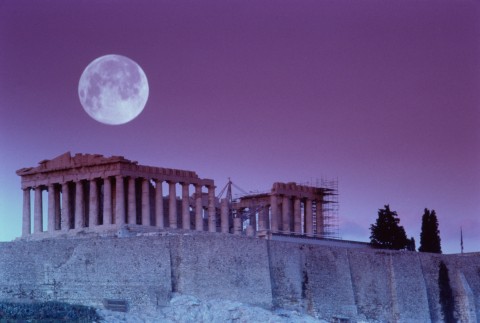
Now you have the phrases—but what about the destinations? Here are some of the best travel destinations in Greece to get you started, including major cities, islands, and well-known neighborhoods travelers often ask about.
Note: The accent mark (´) in the Greek spelling shows you which syllable to stress.
| English Name | Greek Name | Romanization | “I Want to Go to…” Example |
|---|---|---|---|
| Athens | η Αθήνα | i Athína | Θέλω να πάω στην Αθήνα. (Thélo na páo stin Athína.) |
| Thessaloniki | η Θεσσαλονίκη | i Thessaloníki | Θέλω να πάω στη Θεσσαλονίκη. (Thélo na páo sti Thessaloníki.) |
| Patras | η Πάτρα | i Pátra | Θέλω να πάω στην Πάτρα. (Thélo na páo stin Pátra.) |
| Heraklion | το Ηράκλειο | to Irákleio | Θέλω να πάω στο Ηράκλειο. (Thélo na páo sto Irákleio.) |
| Piraeus | ο Πειραιάς | o Piraiás | Θέλω να πάω στον Πειραιά. (Thélo na páo ston Piraiá.) |
| Santorini | η Σαντορίνη | i Santoríni | Θέλω να πάω στη Σαντορίνη. (Thélo na páo sti Santoríni.) |
| Mykonos | η Μύκονος | i Mýkonos | Θέλω να πάω στη Μύκονο. (Thélo na páo sti Mýkono.) |
| Crete | η Κρήτη | i Kríti | Θέλω να πάω στην Κρήτη. (Thélo na páo stin Kríti.) |
| Rhodes | η Ρόδος | i Ródos | Θέλω να πάω στη Ρόδο. (Thélo na páo sti Ródo.) |
| Corfu | η Κέρκυρα | i Kérkyra | Θέλω να πάω στην Κέρκυρα. (Thélo na páo stin Kérkyra.) |
| Plaka | η Πλάκα | i Pláka | Θέλω να πάω στην Πλάκα. (Thélo na páo stin Pláka.) |
| Monastiraki | το Μοναστηράκι | to Monastiráki | Θέλω να πάω στο Μοναστηράκι. (Thélo na páo sto Monastiráki.) |
| Oia | η Οία | i Oía | Θέλω να πάω στην Οία. (Thélo na páo stin Oía.) |
| Glyfada | η Γλυφάδα | i Glyfáda | Θέλω να πάω στη Γλυφάδα. (Thélo na páo sti Glyfáda.) |
| Meteora | τα Μετέωρα | ta Metéora | Θέλω να πάω στα Μετέωρα. (Thélo na páo sta Metéora.) |
Swap In Your Own Destination: Practice the Patterns
Ready to try it yourself? The best way to learn is to speak. Read these exchanges aloud to practice the flow of the conversation. These will help you discuss must-see destinations in Greece and ask for help when you need it.
Practice 1: Asking and answering
- Q: Πού είναι η Ακρόπολη; (Poú eínai i Akrópoli?) — “Where is the Acropolis?”
- A: Είναι στην Αθήνα. (Eínai stin Athína.) — “It’s in Athens.”
Practice 2: Asking and answering about an island group
- Q: Πού είναι η Σαντορίνη; (Poú eínai i Santoríni?) — “Where is Santorini?”
- A: Είναι στις Κυκλάδες. (Eínai stis Kykládes.) — “It’s in the Cyclades.”
Practice 3: Stating where you want to go
- Θέλω να πάω στη Θεσσαλονίκη. (Thélo na páo sti Thessaloníki.) — “I want to go to Thessaloniki.”
Practice 4: Asking about distance
- Είναι κοντά ή μακριά; (Eínai kontá í makriá?) — “Is it near or far?”
Now, let’s put it all together. Imagine you’re lost in Athens and you stop a passerby for help.
You: Συγγνώμη, πού είναι το Μοναστηράκι; (Signómi, poú eínai to Monastiráki?) “Excuse me, where is Monastiraki?”
Passerby: Είναι εκεί, κοντά. (Eínai ekeí, kontá.) “It’s there, nearby.”
You: Ευχαριστώ πολύ! (Efcharistó polý!) “Thank you very much!”
Passerby: Παρακαλώ! (Parakaló!) “You’re welcome!”
Great work! Now, choose three places from the cheat sheet. For each one, practice asking where it is and then stating that you want to go there. Saying it aloud will build your confidence for the real thing.
Mainland, Island, or Neighborhood? A Quick Travel Note
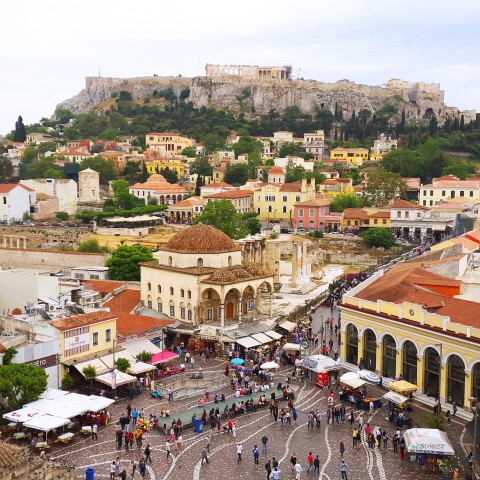
When exploring Greece travel destinations, you’ll encounter names of mainland cities (Αθήνα, Θεσσαλονίκη), famous islands (Κρήτη, Ρόδος), and historic neighborhoods (Πλάκα, Μοναστηράκι). The good news is that the patterns Πού είναι…; and Θέλω να πάω… work for all of them. Just remember to use the correct form (στην, στο, στον), and you’ll be understood perfectly.
Quick Check: Match the Places
Let’s make sure the names are sticking. Match each Greek place name below to its English equivalent.
- Η Κρήτη
- Η Θεσσαλονίκη
- Το Ηράκλειο
- Η Ρόδος
- Η Πλάκα
A. Heraklion
B. Plaka
C. Crete
D. Thessaloniki
E. Rhodes
Answers: 1-C, 2-D, 3-A, 4-E, 5-B
You Can Now Ask About Greek Places and Say Where You’re Going
You’ve just learned some of the most practical language for any trip to Greece. You can now recognize several famous cities in Greece and other popular areas. More importantly, you have the tools to ask where a place is (Πού είναι…;), say where you want to go (Θέλω να πάω…), and understand simple answers like “here,” “there,” “near,” and “far.”
For your final challenge, pick three more destinations from the table. For each one, say both “Where is…?” and “I want to go to…” aloud. The more you practice, the more natural it will feel.
And when you’re ready to expand your directional skills further, continue with our lesson “Are You Lost in Greece?”