
Renewing your right to stay in Greece can feel intimidating, especially when the Greek suddenly becomes much more formal than the language you use at a cafe, supermarket, or with friends.
You may already know how to introduce yourself, order food, or ask for directions. Then you need to renew an άδεια διαμονής (ádia diamonís, “residence permit”), upload δικαιολογητικά (dikeologitiká, “supporting documents”), understand an official email, or attend an appointment for biometric data.
The good news is that immigration and residence-permit procedures use a relatively small set of recurring words and expressions. Once you recognize them, applications and appointments become much easier to follow.
This guide gives you 40 practical Greek phrases for renewing a residence permit, submitting documents, asking questions, understanding instructions, and handling the next stages of the process.
One important distinction before we begin: people often say “visa renewal” in everyday English, but if you’re already residing in Greece, the procedure you’re dealing with may actually be an ανανέωση άδειας διαμονής (ananéosi ádias diamonís, “renewal of a residence permit”).
For third-country nationals, Greece currently requires residence-permit renewal applications to be submitted online. After successful submission, applicants receive confirmation by email, followed later by notifications concerning biometrics and the decision.
Table of Contents
Before You Renew Your Residence Permit in Greece

The exact procedure depends on your residence-permit category and personal circumstances.
For third-country nationals, the renewal itself is currently an online procedure. You’ll enter contact information, provide any required payment code, and upload the supporting documents required for your particular application. The official government service notes that document requirements vary case by case.
That means the most useful Greek isn’t one memorized conversation. It’s the language that lets you:
- Explain which procedure you’re completing
- Understand online instructions
- Ask which documents are required
- Confirm whether something is missing
- Handle a biometrics appointment
- Understand emails or instructions from staff
- Ask what happens next
Quick Answer: You don’t need advanced Greek to handle the basic communication around a residence-permit renewal. Recognizing the most common administrative vocabulary and knowing how to ask for clarification can make the process much easier.
What Procedures Might Foreign Residents Need?
Greek residence permits fall into many categories, including permits connected with employment, study, family reunification, long-term residence, and other circumstances. Each category can have its own renewal requirements.
For language-learning purposes, however, several situations are especially useful to recognize.
Renewing a Residence Permit
The key expression is:
ανανέωση άδειας διαμονής
ananéosi ádias diamonís
“renewal of a residence permit”
If you’re explaining what you need, you can say:
Θα ήθελα να ανανεώσω την άδεια διαμονής μου.
Tha íthela na ananeóso tin ádia diamonís mou.
“I’d like to renew my residence permit.”
This is more precise than simply talking about renewing a βίζα (víza, “visa”) once you’re already living in Greece under a residence permit.
Submitting an Online Application
Useful terms include:
ηλεκτρονική αίτηση
ilektronikí étisi
“online application”
υποβολή αίτησης
ipovolí étisis
“submission of an application”
δικαιολογητικά
dikeologitiká
“supporting documents”
βεβαίωση κατάθεσης αίτησης
vevéosi katáthesis étisis
“confirmation/certificate of application submission”
After a successful online renewal application, the Greek government service says applicants receive proof of submission and the relevant certificate by email.
Providing Biometric Data
Another important expression is:
βιομετρικά στοιχεία
viometriká stihía
“biometric data”
After an online renewal application, applicants may later receive an email notice about providing biometric data.
Useful related vocabulary includes:
δακτυλικά αποτυπώματα
daktiliká apotipómata
“fingerprints”
φωτογραφία
fotografía
“photograph”
ραντεβού
randevú
“appointment”
Why Immigration Greek Can Feel Difficult
Administrative Greek often sounds more formal than the Greek learners encounter in beginner lessons.
A major difference is how you address the other person.
With a friend, you might use the informal singular:
Μπορείς να με βοηθήσεις;
Borís na me voithísis?
“Can you help me?”
With an official or someone you don’t know, the formal plural is more appropriate:
Μπορείτε να με βοηθήσετε;
Boríte na me voithísete?
“Can you help me?”
This distinction matters throughout the phrases in this guide. GreekPod101’s When Should you Talk in Formal Greek? explains how formal Greek generally uses second-person plural verb forms when addressing someone politely.
You don’t need complicated formal language, though. A few polite sentence patterns are enough.
Useful Formal Patterns
Θα ήθελα…
Tha íthela…
“I would like…”
Μπορείτε να…?
Boríte na…?
“Can you…?”
Παρακαλώ…
Parakaló…
“Please…”
Χρειάζεται να…?
Hriázete na…?
“Is it necessary to…?”
Pro Tip
Don’t try to understand every word.
If you recognize key terms such as:
αίτηση
étisi
“application”
ανανέωση
ananéosi
“renewal”
δικαιολογητικά
dikeologitiká
“supporting documents”
άδεια διαμονής
ádia diamonís
“residence permit”
βιομετρικά στοιχεία
viometriká stihía
“biometric data”
you’ll often understand what the conversation or message is about even if you miss some surrounding words.
Immigration Documents and Terms You’ll See
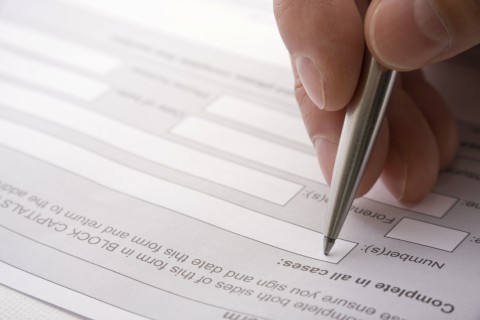
One of the most difficult parts of immigration isn’t necessarily speaking. It’s understanding the paperwork.
The documents required for renewal differ according to the residence-permit category. Greece’s Ministry of Migration and Asylum maintains separate lists of supporting documents for different permit categories, including employment, study, family reunification, and long-term residence.
Instead of memorizing one supposedly universal checklist, learn the vocabulary that helps you understand your checklist.
Essential Document Vocabulary
| Greek | Romanization | English |
|---|---|---|
| άδεια διαμονής | ádia diamonís | “residence permit” |
| διαβατήριο | diavatírio | “passport” |
| αίτηση | étisi | “application” |
| ηλεκτρονική αίτηση | ilektronikí étisi | “online application” |
| δικαιολογητικά | dikeologitiká | “supporting documents” |
| έγγραφο | éngrafo | “document” |
| πρωτότυπο | protótipo | “original” |
| φωτοτυπία | fototipía | “photocopy” |
| φωτογραφία | fotografía | “photograph” |
| παράβολο | parávolo | “administrative fee” |
| απόδειξη πληρωμής | apódixi pliromís | “proof of payment” |
| βεβαίωση | vevéosi | “certificate / confirmation” |
| ραντεβού | randevú | “appointment” |
| βιομετρικά στοιχεία | viometriká stihía | “biometric data” |
| δακτυλικά αποτυπώματα | daktiliká apotipómata | “fingerprints” |
40 Essential Greek Immigration Phrases
The renewal procedure in Greece doesn’t necessarily involve one long face-to-face immigration appointment. Much of the renewal process for third-country nationals is currently handled online, followed by later communications and, when applicable, a biometrics appointment.
So these 40 phrases cover both online administration and the in-person interactions you may still need.
You don’t need to memorize all of them at once. Focus on the ones that match the stage you’re dealing with now.
Arriving for an Appointment: 5 Phrases

1. Πού είναι η υποδοχή;
Pú íne i ipodohí?
“Where is the reception desk?”
Useful when you arrive at an unfamiliar government office.
2. Σε ποιο γραφείο πρέπει να πάω;
Se pio grafío prépi na páo?
“Which office should I go to?”
Use this if you’re unsure where your appointment is being handled.
3. Πρέπει να πάρω αριθμό προτεραιότητας;
Prépi na páro arithmó protereótitas?
“Do I need to take a number?”
Useful in an office that uses a numbered queue.
4. Έχω ραντεβού.
Ého randevú.
“I have an appointment.”
Short, natural, and useful as soon as you arrive.
5. Έλαβα αυτό το email για το ραντεβού μου.
Élava aftó to email ya to randevú mou.
“I received this email about my appointment.”
Keep the relevant email or notification accessible on your phone.
Explaining What You Need: 8 Phrases
6. Θα ήθελα να ανανεώσω την άδεια διαμονής μου.
Tha íthela na ananeóso tin ádia diamonís mou.
“I’d like to renew my residence permit.”
This is the core sentence for the entire article.
7. Έχω υποβάλει αίτηση για ανανέωση.
Ého ipováli étisi ya ananéosi.
“I’ve submitted an application for renewal.”
8. Υπέβαλα την αίτησή μου ηλεκτρονικά.
Ipévala tin étisí mou ilektroniká.
“I submitted my application online.”
This is particularly useful in Greece because third-country-national renewal applications are currently submitted online.
9. Είναι η πρώτη μου ανανέωση.
Íne i próti mou ananéosi.
“This is my first renewal.”
10. Η άδεια διαμονής μου λήγει σύντομα.
I ádia diamonís mou lígi síndoma.
“My residence permit expires soon.”
11. Θα ήθελα πληροφορίες για τη διαδικασία.
Tha íthela pliroforíes ya ti diadikasía.
“I’d like information about the procedure.”
12. Έλαβα ειδοποίηση για βιομετρικά στοιχεία.
Élava idopíisi ya viometriká stihía.
“I received a notification about biometric data.”
13. Έχω ραντεβού για τη λήψη βιομετρικών στοιχείων.
Ého randevú ya ti lípsi viometrikón stihíon.
“I have an appointment to provide biometric data.”
Submitting and Showing Documents: 8 Phrases
14. Ορίστε το διαβατήριό μου.
Oríste to diavatírió mou.
“Here’s my passport.”
15. Ορίστε η άδεια διαμονής μου.
Oríste i ádia diamonís mou.
“Here’s my residence permit.”
16. Ορίστε τα απαιτούμενα δικαιολογητικά.
Oríste ta apetúmena dikeologitiká.
“Here are the required supporting documents.”
17. Έχω και φωτοτυπίες.
Ého ke fototipíes.
“I also have photocopies.”
18. Ορίστε το πρωτότυπο.
Oríste to protótipo.
“Here’s the original.”
19. Έχω και την απόδειξη πληρωμής.
Ého ke tin apódixi pliromís.
“I also have the proof of payment.”
20. Λείπει κάποιο δικαιολογητικό;
Lípi kápio dikeologitikó?
“Is any supporting document missing?”
This is one of the most useful questions you can learn.
21. Είναι πλήρης ο φάκελός μου;
Íne plíris o fákelós mou?
“Is my application file complete?”
Asking Questions: 8 Phrases
22. Ποια δικαιολογητικά χρειάζονται;
Pia dikeologitiká hriázonde?
“Which supporting documents are required?”
Because the required documents depend on the residence-permit category, this is much more useful than memorizing a generic checklist.
23. Τι είναι αυτό;
Ti íne aftó?
“What is this?”
Simple, but extremely useful when dealing with an unfamiliar form or document.
24. Πού πρέπει να ανεβάσω αυτό το έγγραφο;
Pú prépi na aneváso aftó to éngrafo?
“Where should I upload this document?”
25. Πρέπει να υπογράψω εδώ;
Prépi na ipográpso edó?
“Should I sign here?”
26. Μπορείτε να το επαναλάβετε, παρακαλώ;
Boríte na to epanalávete, parakaló?
“Could you repeat that, please?”
27. Μπορείτε να μιλάτε λίγο πιο αργά, παρακαλώ;
Boríte na miláte lígo pio argá, parakaló?
“Could you speak a little more slowly, please?”
28. Μιλάτε αγγλικά;
Miláte angliká?
“Do you speak English?”
29. Δεν καταλαβαίνω.
Den katalavéno.
“I don’t understand.”
These last four phrases are worth practicing together. GreekPod101’s How to Ask for Clarification – Examples and Variations specifically practices expressions such as the formal Μπορείτε να το επαναλάβετε αυτό; (Boríte na to epanalávete aftó?, “Can you repeat that?”) as well as Δεν καταλαβαίνω. (Den katalavéno., “I don’t understand.”).
Instructions You May Hear: 6 Phrases
These phrases are useful because they’re things an employee may say to you.
30. Παρακαλώ περιμένετε.
Parakaló periménete.
“Please wait.”
31. Παρακαλώ καταθέστε αυτό το δικαιολογητικό.
Parakaló katathéste aftó to dikeologitikó.
“Please submit this supporting document.”
32. Χρειάζεται αυτό το δικαιολογητικό.
Hriázete aftó to dikeologitikó.
“This supporting document is required.”
33. Χρειάζονται επιπλέον δικαιολογητικά.
Hriázonde epipléon dikeologitiká.
“Additional supporting documents are required.”
Don’t assume this means your application has been rejected. It simply tells you that additional documentation is needed.
34. Ελέγξτε το email σας για την ειδοποίηση.
Eléngkste to email sas ya tin idopíisi.
“Check your email for the notification.”
Email is particularly important in the current renewal process because notices concerning biometrics and the decision are sent electronically.
35. Κρατήστε τη βεβαίωση κατάθεσης της αίτησης.
Kratíste ti vevéosi katáthesis tis étisis.
“Keep the confirmation of your application submission.”
Biometrics and Next Steps: 5 Phrases
36. Ήρθα για τα βιομετρικά στοιχεία.
Írtha ya ta viometriká stihía.
“I’m here to provide my biometric data.”
37. Πρέπει να δώσω δακτυλικά αποτυπώματα;
Prépi na dóso daktiliká apotipómata?
“Do I need to provide fingerprints?”
38. Τι πρέπει να κάνω στη συνέχεια;
Ti prépi na káno sti sinéhia?
“What should I do next?”
39. Πότε θα ενημερωθώ για την απόφαση;
Póte tha enimerothó ya tin apófasi?
“When will I be informed of the decision?”
40. Σας ευχαριστώ πολύ για τη βοήθειά σας.
Sas efharistó polí ya ti voíthiá sas.
“Thank you very much for your help.”
A polite, natural way to finish the interaction.
Practice Tip: Learn the Situation, Not Just the Phrase
Reading the 40 phrases is useful, but don’t treat them as 40 unrelated sentences.
Look for patterns you can reuse.
Θα ήθελα…
Tha íthela…
“I would like…”
Πρέπει να…?
Prépi na…?
“Do I need to…?”
Μπορείτε να…?
Boríte na…?
“Can you…?”
Πού πρέπει να…?
Pú prépi na…?
“Where should I…?”
Once you understand those patterns, you can create many new sentences without memorizing each one separately.
Example Dialogue: Asking About a Residence-Permit Renewal

Imagine you’ve submitted your renewal application online and later attend an appointment connected with the process.
Resident:
Καλημέρα. Έχω ραντεβού.
Kaliméra. Ého randevú.
“Good morning. I have an appointment.”
Employee:
Καλημέρα. Έχετε το διαβατήριό σας και την άδεια διαμονής σας;
Kaliméra. Éhete to diavatírió sas ke tin ádia diamonís sas?
“Good morning. Do you have your passport and residence permit?”
Resident:
Ναι, ορίστε.
Ne, oríste.
“Yes, here you are.”
Employee:
Έχετε και τη βεβαίωση της αίτησής σας;
Éhete ke ti vevéosi tis étisís sas?
“Do you also have the confirmation of your application?”
Resident:
Ναι. Ορίστε τα έγγραφα.
Ne. Oríste ta éngrafa.
“Yes. Here are the documents.”
Employee:
Ευχαριστώ. Παρακαλώ περιμένετε λίγο.
Efharistó. Parakaló periménete lígo.
“Thank you. Please wait a little.”
Resident:
Βεβαίως, ευχαριστώ.
Vevéos, efharistó.
“Of course, thank you.”
Notice that the resident doesn’t need advanced grammar. The interaction is polite, direct, and easy to follow.
Example Dialogue: An Additional Document Is Required
Sometimes you’ll be asked to provide something else.
Employee:
Χρειάζεται ένα επιπλέον δικαιολογητικό.
Hriázete éna epipléon dikeologitikó.
“An additional supporting document is required.”
Resident:
Ποιο δικαιολογητικό χρειάζεται;
Pio dikeologitikó hriázete?
“Which supporting document is required?”
Employee:
Χρειαζόμαστε αυτό το έγγραφο.
Hriazómaste aftó to éngrafo.
“We need this document.”
Resident:
Μπορώ να το ανεβάσω ηλεκτρονικά;
Boró na to aneváso ilektroniká?
“Can I upload it online?”
Employee:
Ναι.
Ne.
“Yes.”
Resident:
Μέχρι πότε πρέπει να το υποβάλω;
Méhri póte prépi na to ipoválo?
“By when do I need to submit it?”
Being able to ask that final question is often more useful than trying to predict every possible document you could be asked for.
Greek Immigration Vocabulary Cheat Sheet
| Greek | Romanization | English | Category |
|---|---|---|---|
| άδεια διαμονής | ádia diamonís | “residence permit” | Documents |
| διαβατήριο | diavatírio | “passport” | Documents |
| ανανέωση | ananéosi | “renewal” | Procedures |
| αίτηση | étisi | “application” | Procedures |
| ηλεκτρονική αίτηση | ilektronikí étisi | “online application” | Procedures |
| υποβολή | ipovolí | “submission” | Procedures |
| δικαιολογητικό | dikeologitikó | “supporting document” | Documents |
| έγγραφο | éngrafo | “document” | Documents |
| πρωτότυπο | protótipo | “original” | Documents |
| φωτοτυπία | fototipía | “photocopy” | Documents |
| φωτογραφία | fotografía | “photograph” | Documents |
| παράβολο | parávolo | “administrative fee” | Payment |
| απόδειξη πληρωμής | apódixi pliromís | “proof of payment” | Payment |
| βεβαίωση | vevéosi | “certificate / confirmation” | Documents |
| βεβαίωση κατάθεσης αίτησης | vevéosi katáthesis étisis | “application-submission confirmation” | Documents |
| ραντεβού | randevú | “appointment” | Procedures |
| ειδοποίηση | idopíisi | “notification” | Procedures |
| βιομετρικά στοιχεία | viometriká stihía | “biometric data” | Procedures |
| δακτυλικά αποτυπώματα | daktiliká apotipómata | “fingerprints” | Procedures |
| απόφαση | apófasi | “decision” | Procedures |
| φάκελος | fákelos | “application file” | Procedures |
| αναμονή | anamoní | “waiting” | Office |
| υποδοχή | ipodohí | “reception” | Office |
| γραφείο | grafío | “office / desk” | Office |
| αριθμός προτεραιότητας | arithmós protereótitas | “queue number” | Office |
Common Words and Signs You May See
| Greek | Romanization | English |
|---|---|---|
| Είσοδος | Ísodos | “Entrance” |
| Έξοδος | Éxodos | “Exit” |
| Υποδοχή | Ipodohí | “Reception” |
| Αναμονή | Anamoní | “Waiting” |
| Ραντεβού | Randevú | “Appointments” |
| Αιτήσεις | Etísis | “Applications” |
| Δικαιολογητικά | Dikeologitiká | “Supporting documents” |
| Υποβολή αίτησης | Ipovolí étisis | “Application submission” |
| Ανανέωση άδειας διαμονής | Ananéosi ádias diamonís | “Residence-permit renewal” |
| Βιομετρικά στοιχεία | Viometriká stihía | “Biometric data” |
| Παραλαβή | Paralaví | “Collection” |
| Πληροφορίες | Pliroforíes | “Information” |
Recognize Before You Translate
You don’t need to translate an entire official message word by word.
Suppose you see:
ανανέωση
ananéosi
δικαιολογητικά
dikeologitiká
and:
βιομετρικά στοιχεία
viometriká stihía
Even if you don’t understand every connecting word, you already know the message concerns renewal documents or biometrics.
That recognition skill is often enough to tell you what to investigate next.
Common Mistakes Learners Make with Greek Immigration Language
Mistake 1: Calling Everything a Visa
A βίζα (víza, “visa”) and an άδεια διαμονής (ádia diamonís, “residence permit”) are not simply two Greek words for the same document.
If you’re renewing a residence permit, learn the more precise phrase:
Θα ήθελα να ανανεώσω την άδεια διαμονής μου.
Tha íthela na ananeóso tin ádia diamonís mou.
“I’d like to renew my residence permit.”
Mistake 2: Assuming the Renewal Starts at a Counter
For third-country nationals, the current Greek government service states that residence-permit and residence-card renewal applications are filed exclusively online.
So don’t prepare only for a face-to-face conversation.
Also learn:
Υπέβαλα την αίτησή μου ηλεκτρονικά.
Ipévala tin étisí mou ilektroniká.
“I submitted my application online.”
and:
Πού πρέπει να ανεβάσω αυτό το έγγραφο;
Pú prépi na aneváso aftó to éngrafo?
“Where should I upload this document?”
Mistake 3: Assuming Everyone Needs the Same Documents
There is no single universal renewal checklist.
The Ministry of Migration and Asylum lists different supporting documents for different residence-permit categories.
The better phrase to memorize is:
Ποια δικαιολογητικά χρειάζονται;
Pia dikeologitiká hriázonde?
“Which supporting documents are required?”
Mistake 4: Using Informal Greek Automatically
In an official interaction, formal Greek is the safer choice.
Use:
Μπορείτε…
Boríte…
rather than:
Μπορείς…
Borís…
when politely addressing an official you don’t know.
Mistake 5: Being Afraid to Ask for Clarification
You don’t need to pretend you understood something important.
Say:
Δεν καταλαβαίνω.
Den katalavéno.
“I don’t understand.”
Then:
Μπορείτε να το επαναλάβετε, παρακαλώ;
Boríte na to epanalávete, parakaló?
“Could you repeat that, please?”
These are normal communication strategies, not signs that your Greek has failed.
Quick Checklist Before Your Next Immigration Step
For the language side of the process, make sure you can:
- Say άδεια διαμονής (ádia diamonís, “residence permit”)
- Explain that you’ve submitted an application
- Ask which documents are required
- Ask whether something is missing
- Ask where to upload or submit a document
- Say that you have an appointment
- Ask someone to repeat themselves
- Understand basic biometrics vocabulary
- Ask what happens next
For the actual administrative requirements, use the current instructions for your particular permit category rather than relying on a generic checklist.
Practice Immigration Conversations with GreekPod101
Learning a list of words is useful. Recognizing those words when someone says them naturally is the harder part.
GreekPod101 can help you practice the same skills that matter in an administrative conversation: listening, polite forms, clarification, vocabulary recognition, and responding without translating every sentence in your head.
Learn Greek You’ll Actually Use
Living in Greece involves much more than immigration.
Practical Greek also helps when you’re:
- Speaking with a landlord
- Opening a bank account
- Visiting a doctor
- Handling government paperwork
- Making appointments
- Receiving deliveries
- Solving everyday problems
Many of the same structures work everywhere.
Θα ήθελα…
Tha íthela…
“I would like…”
Πρέπει να…?
Prépi na…?
“Do I need to…?”
Μπορείτε να…?
Boríte na…?
“Can you…?”
Πού πρέπει να…?
Pú prépi na…?
“Where should I…?”
Build Confidence Through Listening
When studying, don’t only memorize:
αίτηση
étisi
“application”
Practice recognizing it inside a sentence such as:
Υπέβαλα την αίτησή μου ηλεκτρονικά.
Ipévala tin étisí mou ilektroniká.
“I submitted my application online.”
The more often you hear complete patterns, the less likely you are to freeze when someone uses them in real life.
Study Smarter, Not Harder
You don’t need to memorize all 40 phrases tonight.
Try this:
- Choose five phrases relevant to your next step.
- Read them aloud several times.
- Practice the formal Μπορείτε… (Boríte…, “Can you…?”) pattern.
- Practice asking for clarification.
- Review the phrases again before your appointment.
A small set of phrases you can actually understand and produce is much more useful than a long list you’ve only read once.
Frequently Asked Questions
How do you say “residence permit” in Greek?
The standard expression is:
άδεια διαμονής
ádia diamonís
“residence permit”
How do I say “I’d like to renew my residence permit”?
Say:
Θα ήθελα να ανανεώσω την άδεια διαμονής μου.
Tha íthela na ananeóso tin ádia diamonís mou.
“I’d like to renew my residence permit.”
Is renewing a residence permit the same as renewing a visa?
Not necessarily.
For language-learning purposes, βίζα (víza, “visa”) and άδεια διαμονής (ádia diamonís, “residence permit”) are important terms to distinguish.
If the procedure concerns your residence permit, use:
ανανέωση άδειας διαμονής
ananéosi ádias diamonís
“renewal of a residence permit”
Are residence-permit renewals in Greece done online?
For third-country nationals, the current gov.gr renewal service says applications for renewal of a residence permit or residence card are submitted exclusively online.
A useful sentence is:
Υπέβαλα την αίτησή μου ηλεκτρονικά.
Ipévala tin étisí mou ilektroniká.
“I submitted my application online.”
What happens after I submit the renewal application?
The gov.gr service states that, after successful submission, the applicant receives proof of submission and the relevant certificate by email. Later communications concerning biometrics and the decision are also sent by email.
Useful vocabulary includes:
ειδοποίηση
idopíisi
“notification”
βιομετρικά στοιχεία
viometriká stihía
“biometric data”
απόφαση
apófasi
“decision”
What documents do I need?
The exact supporting documents depend on your residence-permit category. The Ministry of Migration and Asylum publishes separate document requirements across categories such as employment, study, family reunification, and long-term residence.
The most useful Greek question is therefore:
Ποια δικαιολογητικά χρειάζονται;
Pia dikeologitiká hriázonde?
“Which supporting documents are required?”
How should I address an immigration official in Greek?
Use formal second-person plural forms.
For example:
Μπορείτε να με βοηθήσετε;
Boríte na me voithísete?
“Can you help me?”
rather than the informal:
Μπορείς να με βοηθήσεις;
Borís na me voithísis?
“Can you help me?”
GreekPod101’s lesson on formal Greek specifically explains this formal second-person-plural pattern.
What should I say if I don’t understand?
Use:
Δεν καταλαβαίνω.
Den katalavéno.
“I don’t understand.”
Then:
Μπορείτε να το επαναλάβετε, παρακαλώ;
Boríte na to epanalávete, parakaló?
“Could you repeat that, please?”
or:
Μπορείτε να μιλάτε λίγο πιο αργά, παρακαλώ;
Boríte na miláte lígo pio argá, parakaló?
“Could you speak a little more slowly, please?”
What’s the most important Greek immigration vocabulary to learn?
If you only learn ten expressions, start with:
άδεια διαμονής
ádia diamonís
“residence permit”
ανανέωση
ananéosi
“renewal”
αίτηση
étisi
“application”
δικαιολογητικά
dikeologitiká
“supporting documents”
έγγραφο
éngrafo
“document”
ραντεβού
randevú
“appointment”
βεβαίωση
vevéosi
“certificate / confirmation”
βιομετρικά στοιχεία
viometriká stihía
“biometric data”
ειδοποίηση
idopíisi
“notification”
απόφαση
apófasi
“decision”
Final Thoughts
Greek immigration vocabulary can look intimidating because it’s formal, administrative, and different from the Greek you hear in casual conversation.
But you don’t need perfect Greek.
Start with:
Θα ήθελα να ανανεώσω την άδεια διαμονής μου.
Tha íthela na ananeóso tin ádia diamonís mou.
“I’d like to renew my residence permit.”
Then learn:
Ποια δικαιολογητικά χρειάζονται;
Pia dikeologitiká hriázonde?
“Which supporting documents are required?”
Λείπει κάποιο δικαιολογητικό;
Lípi kápio dikeologitikó?
“Is any supporting document missing?”
Μπορείτε να το επαναλάβετε, παρακαλώ;
Boríte na to epanalávete, parakaló?
“Could you repeat that, please?”
Τι πρέπει να κάνω στη συνέχεια;
Ti prépi na káno sti sinéhia?
“What should I do next?”
Those few patterns will take you a long way.
When you’re ready to keep building practical Greek through dialogues, listening practice, and useful everyday vocabulary, start learning real-life Greek with GreekPod101.