
If you’re traveling to Greece or learning the language, one tradition you’ll hear about quickly is the name day, known in Greek as η γιορτή (i giorti). Birthdays still matter, but name days are often just as important in Greece—and for many people with common names, they can feel even bigger.
If your name is Konstantinos or Eleni, for example, May 21 is a major celebration day: it is the feast of Saints Constantine and Helen. If your name is Maria, August 15 is one of the best-known name days of the year, linked to the Dormition of the Theotokos.
Here is what name days are, how people celebrate them, and the Greek phrases that will help you join in naturally.
What Is a Name Day in Greece?

In the Greek Orthodox tradition, the calendar commemorates saints and holy events throughout the year. Many Greek names are linked to one of those feast days, so a person celebrates on the day connected with the saint or feast behind their name.
It is not always a perfect one-to-one system. Some names can be celebrated on more than one date, depending on the exact origin of the name, and names without a direct saint connection may be celebrated on All Saints Day.
That helps explain why name days are often more public than birthdays. Church and printed calendars list the saints and commemorations for each day, so people often know when a friend’s or relative’s celebration is coming up.
How Greeks Celebrate

Name day customs vary from family to family, but one tradition is especially common: the person celebrating does the treating. That may mean bringing sweets to work, paying for coffee, or picking up the tab when a group goes out.
Many celebrations are social and open-ended. Friends and relatives may stop by, call, or send messages throughout the day, especially when the name is very common.
What Travelers Should Expect
As a visitor, you may notice lively tables at tavernas, family gatherings, or extra rounds of phone calls and messages on major feast days.
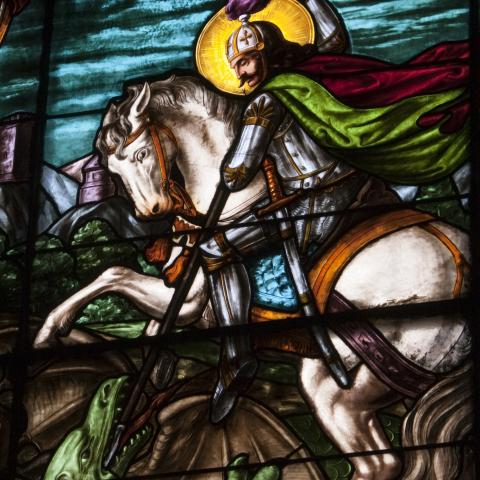
Two famous examples are George—usually celebrated on April 23, although the feast moves to Bright Monday if April 23 falls on or before Pascha—and Maria on August 15.
If you know someone is celebrating, a simple greeting goes a long way. Greeks usually say Χρόνια πολλά! (Chronia polla!), a wish meaning “many years,” and it is used widely for name days, birthdays, and holidays.
Useful Greek Phrases
Here are a few natural phrases to remember:
- Χρόνια πολλά! (Chronia polla!) — “Many years!” / “Happy name day!”
- Και του χρόνου! (Kai tou chronou!) — “And next year!” / “Here’s to celebrating again next year.”
- Να χαίρεσαι το όνομά σου! (Na hairese to onoma sou!) — “Cherish your name.”
Even if you learn only one phrase, make it Χρόνια πολλά! It is warm, easy to remember, and instantly useful.
Take the Next Step in Your Greek Journey
Understanding traditions like name days helps you move past the surface and connect more naturally with people. For more structured practice, GreekPod101 offers Greek audio and video lessons, vocabulary, and phrase resources for learners.